Comfort Viewing Is Eating Hollywood: The Real Money Behind Your Fifth Rewatch

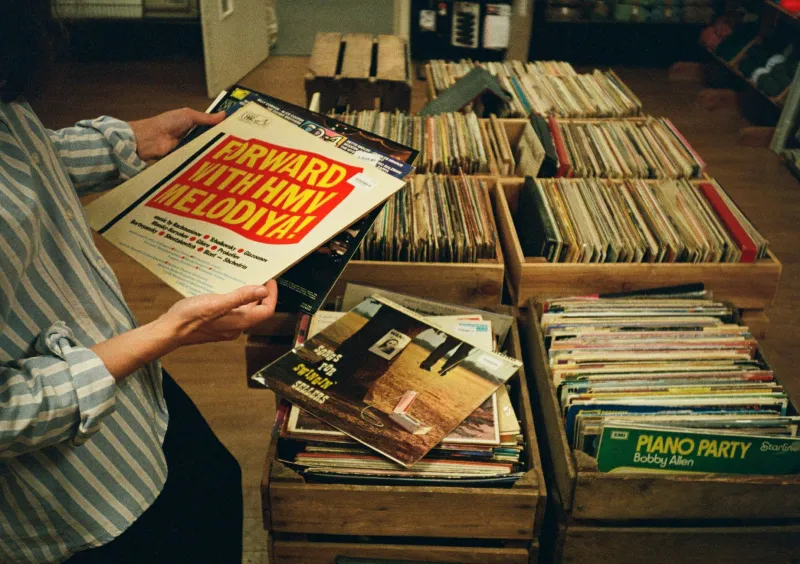
Photo by Photo by Jonas Leupe on Unsplash on Unsplash
Somewhere tonight, someone will hit play on a sitcom that ended before they bought their current couch. They will not finish the episode, exactly. They will half-watch it while answering texts, folding laundry, and deciding whether to order food. And somewhere in a conference room in Los Angeles, that behavior is being studied like a crop report.
Because the most valuable thing on a streaming service in 2026 increasingly isn't the show nobody has seen yet. It's the one everybody has already seen four times.
The Cheapest Programming on the Platform
Run the math from a streaming executive's chair and licensed library content looks almost unfair. A new eight-episode drama requires years of development, a marketing budget that can rival the production cost, and a real risk that it lands in a crowded feed and disappears. A licensed sitcom from a decade ago requires a check, a contract, and a thumbnail.
It also arrives pre-sold. Audiences already know the characters, the rhythm, the jokes. There is no pilot to survive, no premise to learn, no friend to convince. That's why the industry has spent the last several years quietly re-weighting its catalog. The lesson got loud in 2023, when a legal drama that had already finished its run shot to the top of the streaming charts and stayed there for months — a genuine historical turning point that plenty of executives are still trying to reverse-engineer.
Background TV Is the New Prime Time
Look at what actually accumulates viewing hours and a pattern emerges. Long-running procedurals. Animated shows that small children watch on a loop. Sitcoms with laugh tracks and 22-minute runtimes. The kind of television that doesn't demand your eyes, only your presence.
That's a different product than the prestige limited series everyone argues about online. Prestige gets the headlines and the awards and the group chats. Procedural comfort food gets the hours, and hours are what advertisers and subscription renewals are built on. A show you can leave running while you cook is worth more to a platform than a show you binge once and forget, even if the second one wins a trophy.
There's a psychological piece here too. Rewatching is low-stakes. Nothing bad can happen to a character you've already mourned. You know the ending, so the tension is optional. In a year when the news is exhausting and the average streaming menu is paralyzing, a familiar show is less entertainment than a service — and people are happy to pay for a service.
Meanwhile, the Originals Have a Discovery Problem
New shows aren't failing because they're bad. Many are great. They're failing because the pipeline has become a firehose. A series can now debut, get reviewed, trend for 72 hours, and vanish into a shelf nobody scrolls to, all while the algorithm keeps pushing the same dependable favorites.
Add the cost side. Production budgets ballooned, marketing followed, and the streaming business spent a decade chasing subscribers at any price. Now the bill is due, and the correction looks a lot like fewer, bigger swings, more acquisitions, and a whole category of mid-budget scripted shows — the solid B-plus drama that used to fill out a season — quietly going extinct.
Who Actually Benefits
Here's the part that gets interesting. A licensing-driven system can be good for the people who made the older shows. Library deals generate residuals and can revive an actor's profile years after a series wrapped. There's a reason performers who spent five seasons on a cable drama are suddenly recognizable again to a generation that never watched it live.
The people hurt are the ones trying to make something new. If the safest dollar goes to catalog titles, the incentive to commission risky, original, mid-budget work shrinks. Writers who used to build a career on a modest show now compete for a handful of slots.
What You'll Probably Notice Next
Expect more odd pairings: a service that makes prestige originals leaning hard into licensed comfort shows to hold the subscribers between big premieres. Expect FAST-style channels — the free, always-on ones that play a single series on a loop — to keep multiplying, because they monetize exactly the behavior described above. Expect pitches to include the phrase 'rewatchable' in the first three minutes.
And expect the debate to stay unresolved. There's a version of this where the rewatch boom funds ambitious work. There's another where the industry simply gives up on making you curious and settles for making you comfortable. The audience, casually restarting episode one of something ancient, won't be thinking about either.
A Practical Note for Your Queue
None of this requires guilt. Rewatching is cheap, satisfying, and genuinely useful for a brain that has had a long year. But if you want to break the loop without gambling two hours on a stranger, try a smaller bet: an episode of something new, watched with your phone in another room. The comfort shows will still be there. They're not going anywhere, which is precisely the point of the whole business.