Grieving Someone You Never Met: The Very Real Pain of a Celebrity Falling From Grace
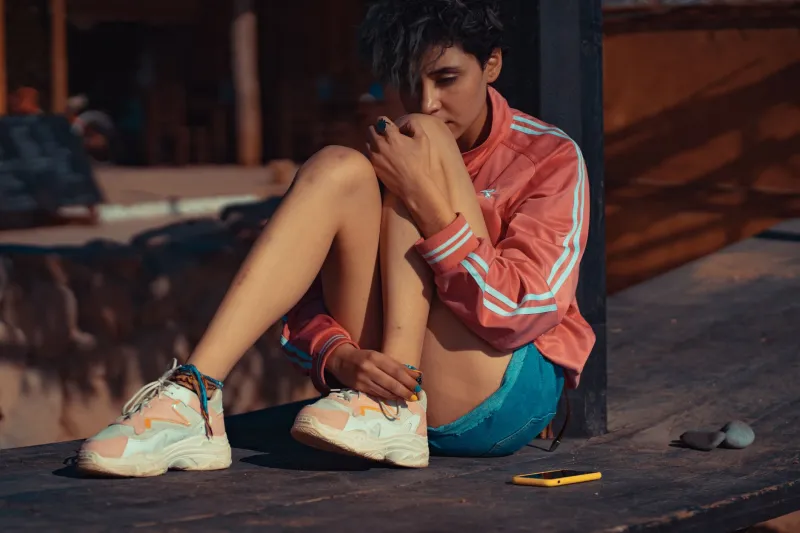
Somewhere in the middle of a Tuesday afternoon, a 28-year-old teacher in Ohio sat in her car and cried for twenty minutes. Not because of a breakup or a family crisis—but because a musician she'd followed since high school had just been dropped by his label amid allegations she couldn't ignore. She hadn't spoken to him. She'd never been in the same room as him. But the grief felt unmistakably real.
"I know how it sounds," she said. "But that music got me through some genuinely dark times. And now every time I try to listen to it, I feel sick."
This is the parasocial breakup—and it's happening to millions of people, with almost no cultural vocabulary to describe it.
What Parasocial Actually Means (And Why It's Not an Insult)
The term "parasocial relationship" was coined by sociologists Donald Horton and Richard Wohl back in 1956 to describe the one-sided intimacy audiences develop with media figures. At the time, they were talking about TV personalities. In 2024, the concept has exploded in scope and intensity.
These relationships exist on a spectrum. At the low end, you've got a casual fan who enjoys a podcast host's vibe. At the high end, you've got someone who has organized significant portions of their emotional life around a celebrity's output—their music, their social media presence, their interviews, their apparent values.
Dr. Pamela Rutledge, director of the Media Psychology Research Center, has written extensively on this territory. She's careful to note that parasocial bonds aren't pathological by default. "These relationships fulfill real psychological needs," she's explained in various forums. "Companionship, inspiration, identity formation. The fact that they're one-sided doesn't make the emotional investment fake."
Which means when that investment collapses—through scandal, through a celebrity's public shift in values, through retirement, or simply through disappointment—the loss is proportional to what was built.
The Scandal Breakup vs. The Slow Fade
Not all celebrity grief looks the same. There are roughly two categories fans describe experiencing.
The first is the sudden rupture—the allegations, the leaked audio, the behavior that can't be explained away. This tends to produce something that mirrors the shock phase of grief almost precisely. Denial, bargaining ("maybe there's context we don't have"), anger, and eventually a kind of hollow acceptance. Fans who go through this often describe feeling stupid, which compounds the loss with shame.
The second type is slower and arguably sadder: the drift. A creator who used to feel like a kindred spirit gradually reveals themselves to hold views that feel alienating. A musician who once seemed to speak directly to your experience becomes unrecognizable. No single moment broke it. It just... ended.
Marcus, a 34-year-old in Atlanta who spent years as a devoted fan of a prominent YouTube creator, described the drift this way: "It wasn't one thing. It was like watching someone you were close to become someone you don't recognize. And you're mourning the version of them that maybe never existed."
That last part matters. What fans are often grieving isn't the celebrity themselves—it's the projected relationship. The imagined friendship. The version of the person they constructed from carefully curated content.
Social Media Turns Private Grief Into a Public Event
Here's where things get complicated in a distinctly modern way. When a celebrity falls, the internet processes it communally and immediately. Twitter (or X, depending on your level of commitment to the rebrand) fills with takes. Reddit threads sprawl into thousands of comments. Fan communities fracture in real time.
For individual fans trying to process a genuine emotional loss, this environment is... a lot.
On one hand, collective processing can be validating. Knowing that thousands of other people feel the same confusion and sadness can make the experience feel less embarrassing. Fan communities often become informal support structures during these moments.
On the other hand, the internet demands you pick a side fast. The nuance of "I loved what this person made and I'm devastated they turned out to be someone I can't support" gets flattened into either devoted defense or performative cancellation. Neither camp has much patience for the messy middle where most fans actually live.
Jessica, a 22-year-old college student in California, put it bluntly: "I wanted to be sad for a second. I wanted to process it. But within like six hours there were people in the fandom fighting each other and I just felt exhausted. I had to log off."
Why We Keep Forming These Bonds Anyway
If parasocial relationships can hurt this much when they dissolve, why do we keep building them?
The honest answer is that they work. For a lot of people—particularly those who are isolated, going through transitions, or simply consuming media alone—the sense of connection that comes from following a creator or celebrity is genuinely sustaining. The parasocial bond provides consistency, entertainment, and a sense of being understood by someone who is, in reality, speaking to millions.
And in an increasingly fragmented media landscape, these bonds have only deepened. Creators who post daily, who share their morning routines and therapy breakthroughs and relationship struggles, are actively cultivating intimacy at scale. The tools of the modern attention economy are essentially parasocial relationship accelerators.
That's not cynical—it's just the reality of how content works now. And it means the emotional stakes of celebrity disappointment aren't going to decrease anytime soon.
Letting Yourself Grieve Without Apologizing
Mental health professionals who work with parasocial grief tend to say the same thing: the dismissiveness we apply to this kind of loss is its own problem. Telling someone to "get over it, you didn't even know them" is the emotional equivalent of telling someone their divorce doesn't count because it wasn't a long marriage.
The loss is real. The relationship—however one-sided—was real. The time invested, the meaning extracted, the identity built around loving someone's work: all of it was real.
What helps, therapists suggest, is the same stuff that helps with other kinds of grief. Naming what you actually lost. Allowing the mourning period without shame. And eventually, separating the art from the artist when that's something you're able to do—or deciding, without guilt, that you can't.
The Ohio teacher eventually stopped crying, drove home, and deleted the musician's albums from her phone. She hasn't listened to them since. "Maybe someday," she said. "But right now it still hurts. And I'm trying to just let it hurt."
That, as it turns out, is probably the healthiest thing any of us can do.